01PlanScope, drawings and documentation
02CoordinateAuthority comments and conditions
03EstablishPeople, vehicles, signs and devices
04ManageLive operation, changes and close-out
01
Design a continuous route around the work
The temporary arrangement should show where people leave the normal path, how they pass or cross the worksite and where they return, with accessibility and vehicle conflicts considered.
- Avoid ending a detour at an unsafe or unusable crossing point.
- Identify narrow widths, gradients, surfaces, driveways and work-vehicle movements.
02
Pedestrian-route details to capture
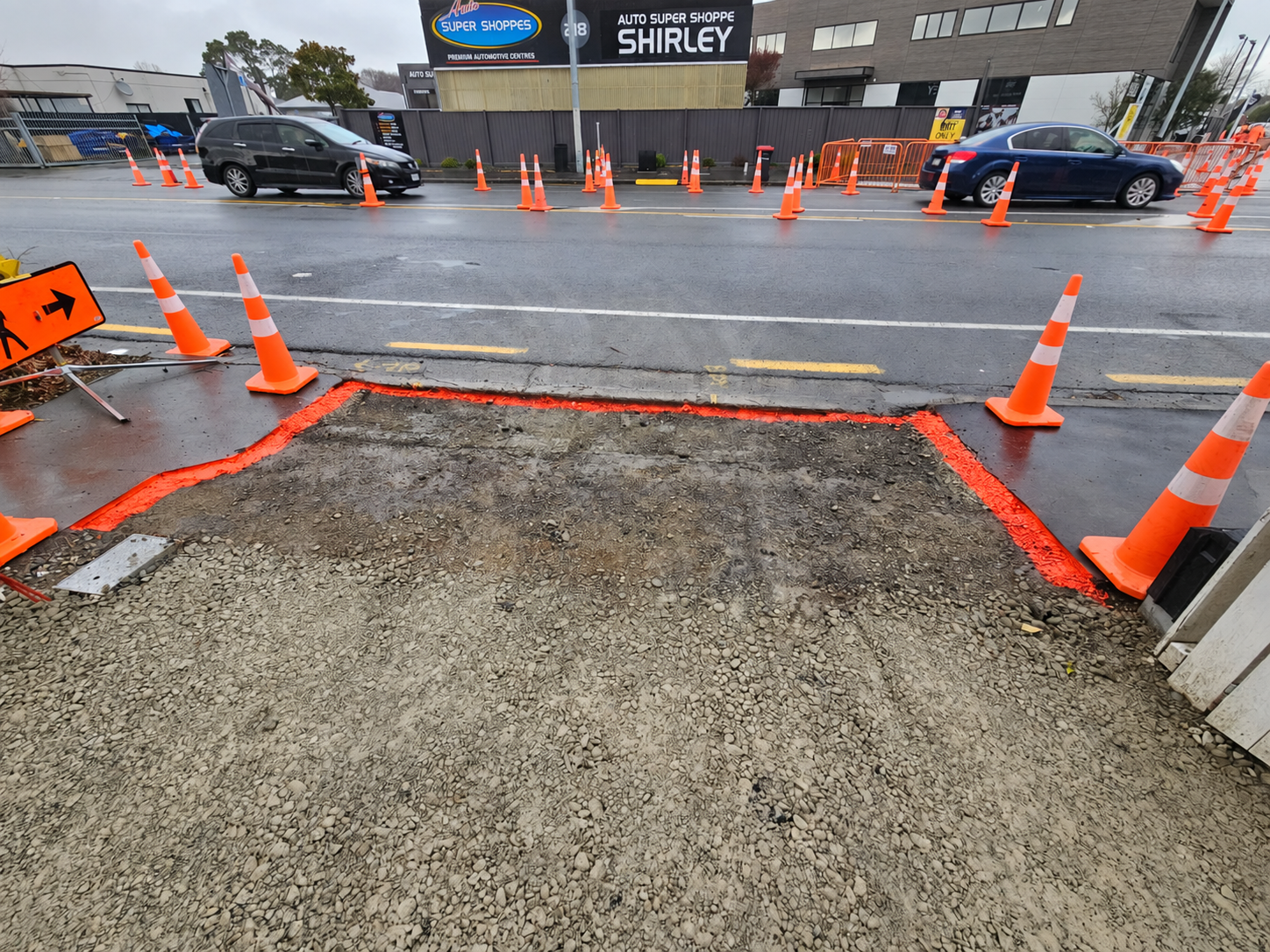
Provide the footpath width, work area and duration, proposed temporary route, site photos and any nearby crossings, bus stops, accesses or cycle facilities.
- Show which stages change the route or available width.
- Include the needs of people who cannot use an informal or uneven diversion.
03
Check the route before the closure is installed
Send the site information for a review of the pedestrian-management approach and the TMP or TMD changes needed to support it.
- Confirm how the route will be maintained during the work window.
- State whether the request includes equipment and on-site establishment.